Welcome
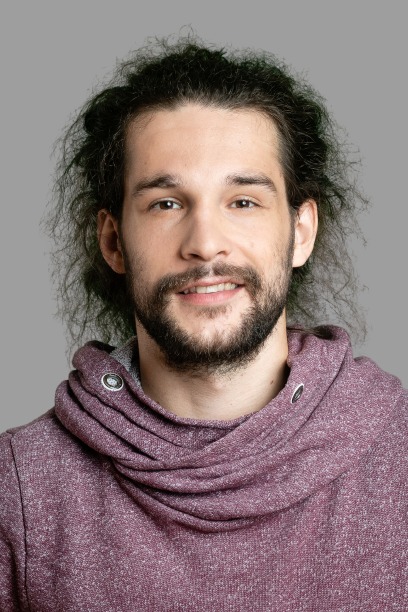
I am a PhD student in Economics at the University of Duisburg-Essen and a member of the Research Training Group 2484 Regional Disparities and Economic Policy. I am an applied microeconomist with research interests in Innovation Economics and Political Economy.
Publications
The Rise of Health Economics: Transforming the Landscape of Economic Research (with Björn Hammarfelt, Martin Karlsson, and Mathias Kifmann). Health Economics
Abstract | Paper
This paper explores the evolving role of health economics within economic research and publishing over the past 30 years. Historically, largely a niche field, health economics has become increasingly prominent, with the share of health economics papers in top journals growing significantly. We aim to identify the factors behind this rise. Using a combination of bibliometric methods and natural language processing (NLP), we classify abstracts to define health economics. Adapting NLP methods to evaluate the novelty, impact, and quality of academic papers, we demonstrate that the mainstreaming of health economics is driven by innovative, high-quality research, with two notable waves in quality ratings that highlight the emergence and impact of distinct subfields within the discipline. We find a strong positive correlation between citations and quality ratings, with health economics papers receiving fewer citations for their quality compared to other economics fields. Pandemic-related research received a high number of citations during 2020 and 2021; however, our findings indicate that this work was not systematically more novel or impactful than prior studies within the same subfield.Current projects
Censorship in Democracy (with Marcel Caesmann, and Matteo Grigoletto). Submitted
Abstract | Working Paper | VoxEU Column
Democracies increasingly use censorship to counter foreign propaganda, yet evidence on its consequences remains scarce. We exploit the European Union’s 2022 ban on Russia Today (RT) and Sputnik as a natural experiment, using a triple-difference design that compares users connected to the banned outlets against unconnected users in EU and non-EU countries. We analyze a daily panel of 677,780 tweets from 146,633 Twitter users in seven European countries. Pro-Russia output declines by 21.7% among connected EU users; in a difference-in-differences comparison with non-EU users, total pro-Russia output among EU users falls by 13.6%. Alternative suppliers do not fill the gap: neither their pro-Russia output nor the engagement they receive rises after the ban. Consistent with an agenda-setting role of the banned outlets, the share of EU users’ tweets covering the outlets’ daily top-five topics decreases by 17%. A survey experiment offers suggestive evidence that such censorship can come at a cost to the very norms it is meant to defend.Selection in the Patent Lottery